Export Hub: Sialkot, PakistanMOQ: Starting from 25 units*
Direct WhatsApp: +92 329 9917636

Garment AQL Chart & Quality Standards

Perfit Industry applies international Acceptable Quality Limit (AQL 2.5) statistical sampling benchmarks (ISO 2859-1 / ANSI/ASQ Z1.4 Level II Normal) across all custom garment export manufacturing.

Review the standardized apparel AQL inspection chart below to understand batch sample sizes, allowed defect thresholds (Critical, Major, Minor), in-line seam tension audits, and measurement tolerance verifications.

Direct WhatsApp Desk
Low 25 Unit MOQ

Launch new capsule collections or test market silhouettes without huge upfront inventory liabilities.

3–7 Day Prototyping

Rapid pre-production fit samples constructed to evaluate fabric drape, measurements, and decoration.

AQL 2.5 QC Benchmark

In-line stitch tension audits, measurement checks against tech packs, and needle detection scanning.

Direct Sialkot Factory

Direct factory-floor pricing cutting out middlemen, brokers, and foreign agency commission markups.

International AQL 2.5 statistical sampling framework (ISO 2859-1 / ANSI/ASQ Z1.4)

Perfit Industry executes production auditing based on General Inspection Level II (Normal Single Sampling) governed by ISO 2859-1 and ANSI/ASQ Z1.4. Rather than relying on arbitrary visual spot-checks, statistical sampling provides mathematically sound quality assurance: random sampling ensures every box and carton in the export shipment is represented proportionately, preventing bias and guaranteeing consistent bulk craftsmanship.
Three-tier apparel defect severity classification (Critical, Major, Minor)

Every garment inspected is scored against rigorous defect categories: Critical Defects (zero-tolerance: 0 allowed, including broken needles, exposed metal, mold, or bio-hazards); Major Defects (AQL 2.5 benchmark: structural flaws such as open seams, dropped stitches, holes, visible fabric shading, or measurement variance exceeding agreed tech pack tolerance); and Minor Defects (AQL 4.0 benchmark: cosmetic issues that do not impact garment function, such as untrimmed threads over 1.5 cm or packaging wrinkles).

Dimensional tolerance verification against approved tech packs (+/- 0.5 cm)

Garments must match the approved graded size charts. Inspectors verify critical points of measure (POM): chest circumference from pit-to-pit, high-point shoulder (HPS) to hem, sleeve length from center back, collar opening circumference, and waistband stretch recovery. Standard commercial tolerance for knitted cotton tees, hoodies, and activewear is +/- 0.5 cm to +/- 1.0 cm depending on garment panel elasticity. Review our Apparel Fit Sample Creation Guide for tolerance details.

Calibrated needle detection & metal scanning protocols

Safety is paramount in international apparel export. Every stitched garment passes through a 9-point conveyorized needle detector calibrated to detect ferrous metal particles as small as 1.0 mm (standard Japanese safety protocol). If a sewing needle breaks during assembly, the broken pieces must be physically reassembled by the line supervisor before a replacement needle is issued, guaranteeing zero metal fragments enter bulk polybags.

In-line stitching, fabric tension & colorfastness audits

Quality control begins before cutting. Fabric rolls are relaxed for 24 hours to relieve knitting tension and pre-tested for shrinkage (target < 3–5%), rubbing colorfastness (dry & wet crocking grade 4+), and spirality. In-line QC inspectors audit sewing lines continuously, checking 4-thread overlock and 4-needle flatlock stitch tension, seam grin-through, bar-tack reinforcement on stress points, and print/embroidery placement registration.

Pre-shipment packaging audits & carton drop testing

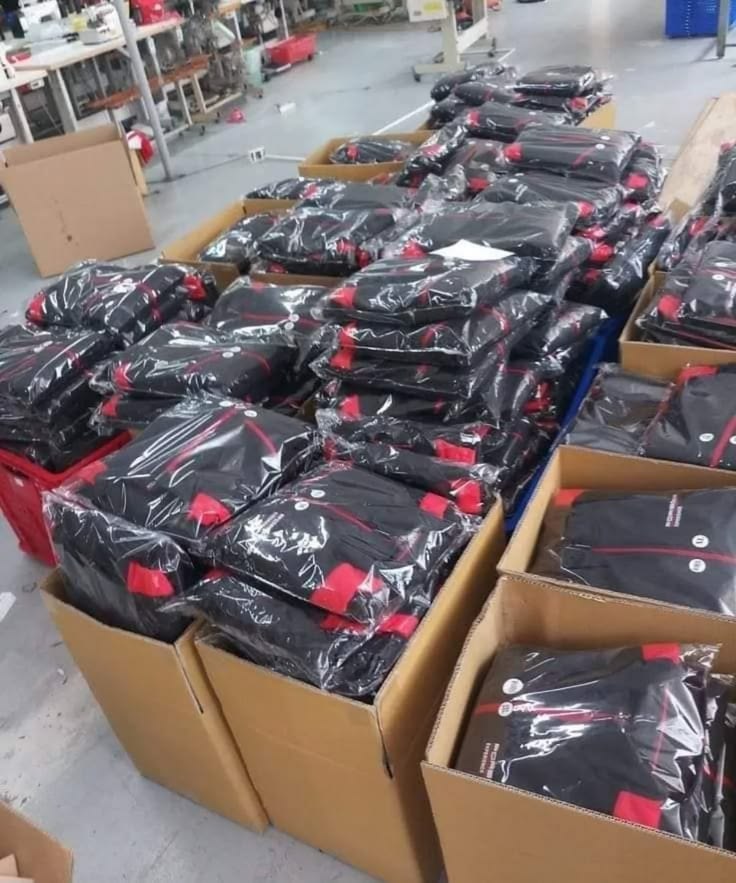
Finished garments are steam-ironed, folded, and placed into individual branded frosted ziplock polybags with barcode SKU labels and silica desiccant gel packs. Master cartons are constructed from heavy 5-ply double-wall corrugated cardboard and undergo standard 1-corner 3-edge 6-face carton drop tests to ensure shipments arrive at your USA, UK, Canadian, or Australian warehouse in pristine retail condition.

Garment AQL 2.5 Inspection Sampling Chart

Governed by ISO 2859-1 and ANSI/ASQ Z1.4 General Inspection Level II (Normal Single Sampling), this standard determines the exact number of finished garments pulled at random across production lots and sets binding acceptance and rejection thresholds.

Order Batch / Lot SizeCode LetterSample Size InspectedCritical (Limit 0)Major (AQL 2.5)Minor (AQL 4.0)
2 – 8 unitsA2 pcs0 Ac / 1 Re0 Ac / 1 Re0 Ac / 1 Re
9 – 15 unitsB3 pcs0 Ac / 1 Re0 Ac / 1 Re0 Ac / 1 Re
16 – 25 unitsC5 pcs0 Ac / 1 Re0 Ac / 1 Re0 Ac / 1 Re
26 – 50 unitsD8 pcs0 Ac / 1 Re0 Ac / 1 Re1 Ac / 2 Re
51 – 90 unitsE13 pcs0 Ac / 1 Re1 Ac / 2 Re1 Ac / 2 Re
91 – 150 unitsF20 pcs0 Ac / 1 Re1 Ac / 2 Re2 Ac / 3 Re
151 – 280 unitsG32 pcs0 Ac / 1 Re2 Ac / 3 Re3 Ac / 4 Re
281 – 500 unitsH50 pcs0 Ac / 1 Re3 Ac / 4 Re5 Ac / 6 Re
501 – 1,200 unitsJ80 pcs0 Ac / 1 Re5 Ac / 6 Re7 Ac / 8 Re
1,201 – 3,200 unitsK125 pcs0 Ac / 1 Re7 Ac / 8 Re10 Ac / 11 Re
3,201 – 10,000 unitsL200 pcs0 Ac / 1 Re10 Ac / 11 Re14 Ac / 15 Re
* Ac = Acceptance Number (Max allowed defects) · Re = Rejection Number (Lot fails if defects equal or exceed this threshold).Inspection Level: General Level II Normal Single Sampling (ANSI/ASQ Z1.4 / ISO 2859-1).
Zero-Tolerance · Accept 0 / Reject 1

Critical Defects (Limit: 0)

Safety or regulatory hazards that render garments unsellable or hazardous: broken needle metal fragments, sharp burrs, mold, chemical odor, or missing country of origin and fiber content labels.

Apparel Export Standard · AQL 2.5

Major Defects (AQL 2.5)

Structural or functional flaws that compromise garment appearance or fit: open seams, dropped stitches, holes, dimensions off by more than +/- 1.0 cm, skewed print placement, or color shading between panels.

Cosmetic Standard · AQL 4.0

Minor Defects (AQL 4.0)

Minor aesthetic flaws that do not impact wearer comfort or garment durability: removable loose threads exceeding 1.5 cm, slight packaging wrinkles, or minor removable lint.

Manufacturing pipeline from cut to pack

Every garment is produced in-house at our Sialkot facility through specialized technical stages.

06 STAGES
Fabric cutting apparel manufacturing stage01

Fabric cutting

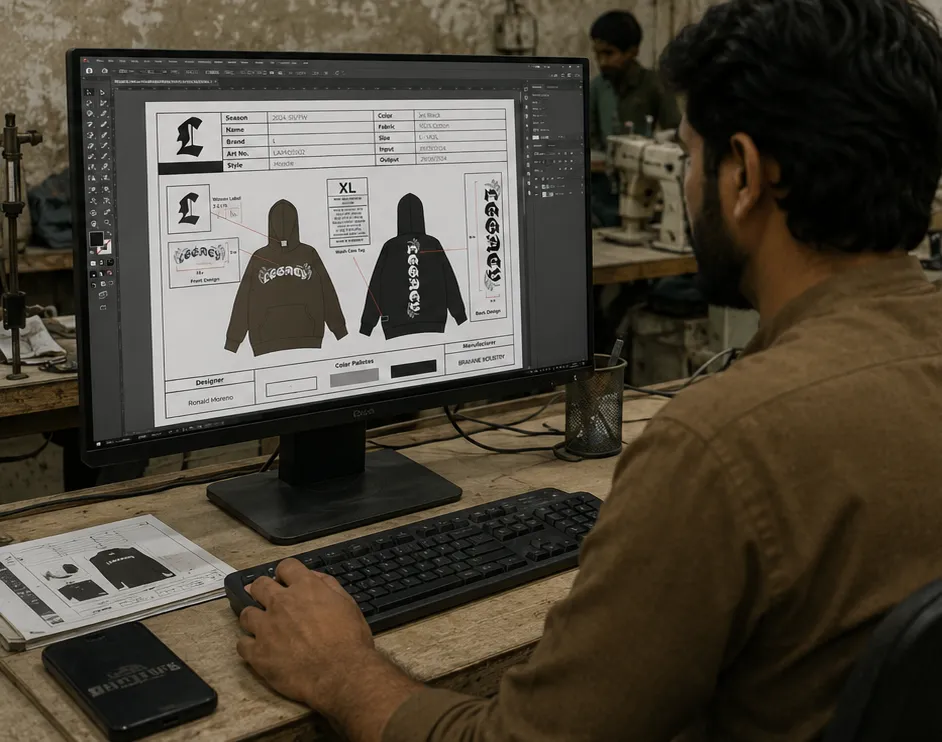
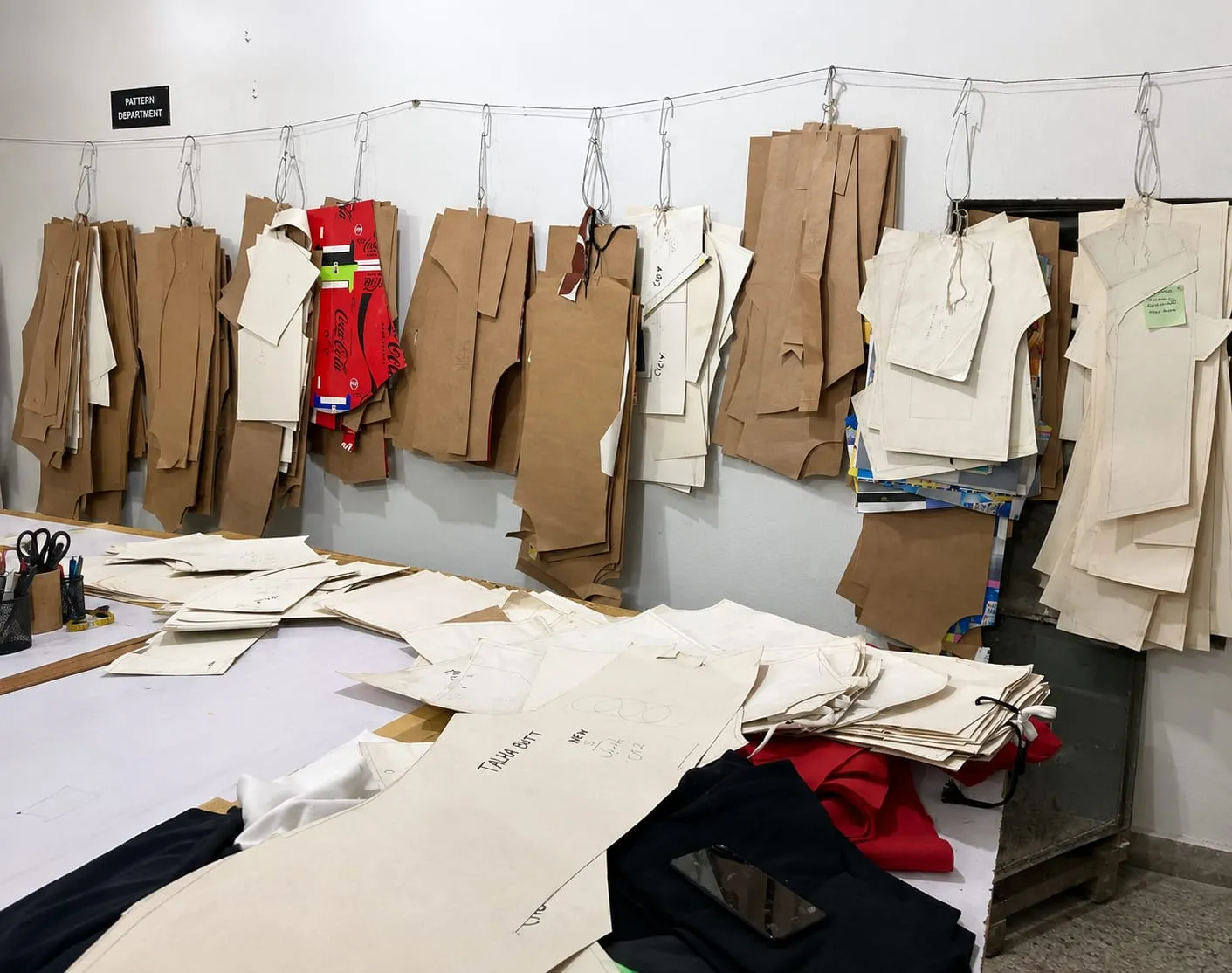
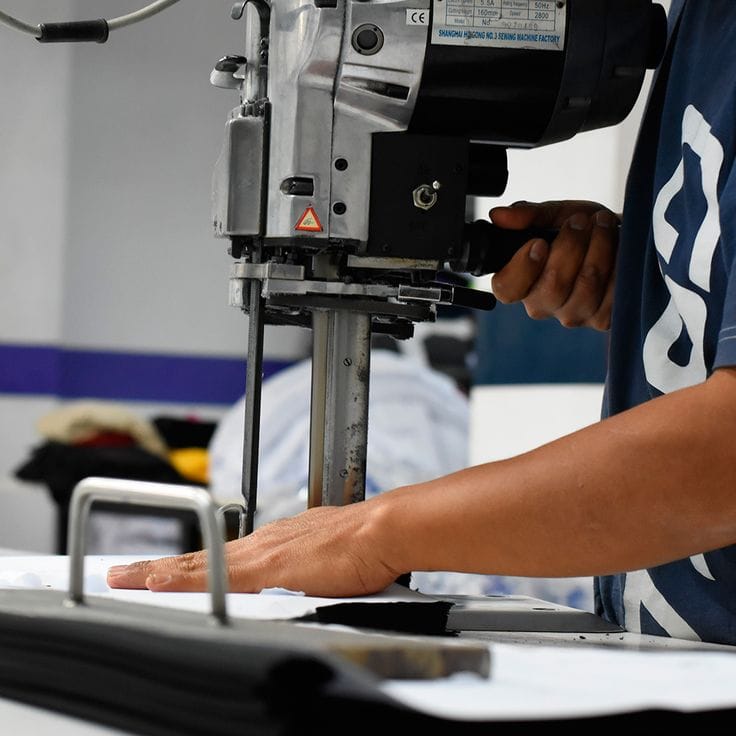
Cutting starts from the pattern and measurements agreed for the product. A buyer can provide a tech pack, size chart, reference sample, colour breakdown and any notes about fabric direction or panel placement. Each style may require a different arrangement of pieces, so the pattern and size range should be clearly identified. If a measurement, material or design panel changes, confirm that the cutting information has been updated before the order proceeds. Discuss how sizes and colours are to be grouped and identified, and make sure the quotation reflects the agreed product and quantity.

Printing apparel manufacturing stage02

Printing

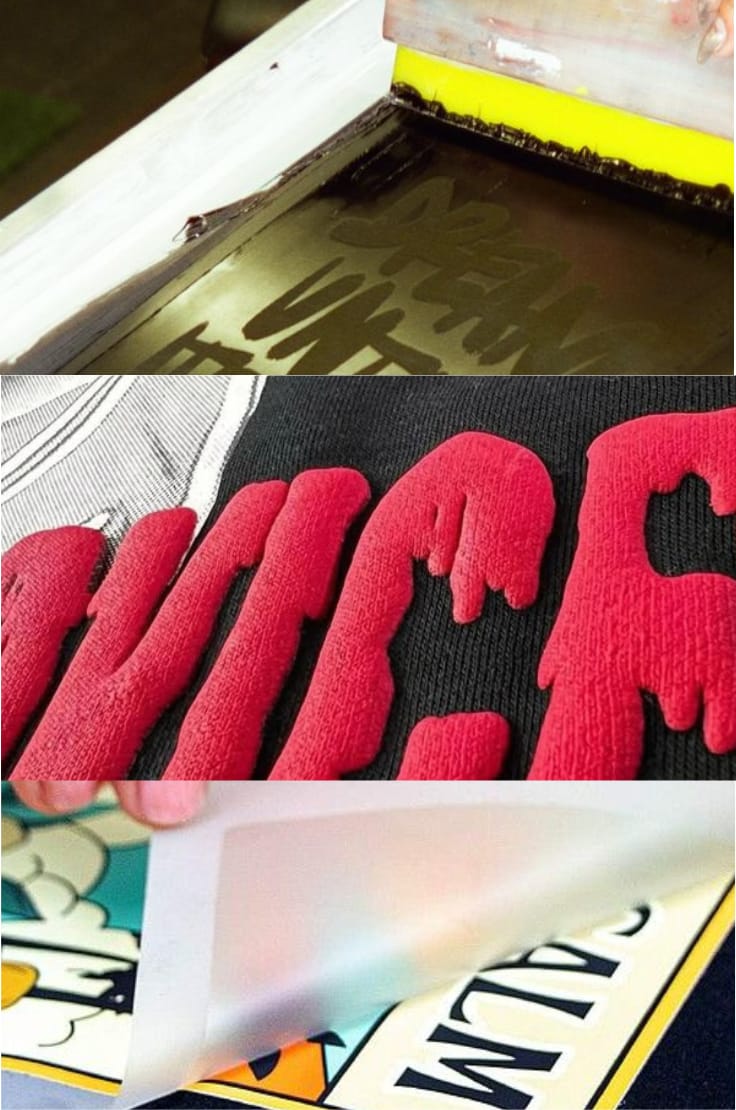
Printing requirements should identify the exact artwork, colour references, dimensions and position on the garment. Use a front, back or detail view and mark the placement point with measurements where possible. If artwork has several colours, layers or placements, specify each one and provide the approved file version. Method suitability depends on the material, design and product, so ask the team to confirm the option being quoted. Any setup, artwork preparation, sample approval or additional print detail should be recorded in the order scope rather than left to assumption.

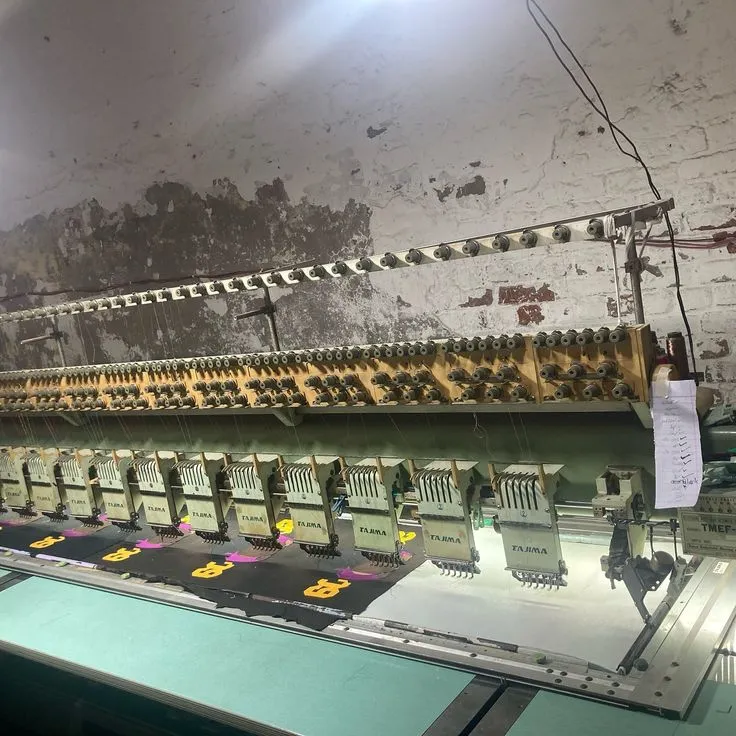
Embroidery apparel manufacturing stage03

Embroidery

Embroidery enquiries benefit from a clear artwork file, placement image, approximate dimensions and thread colour preferences. The location of the design and the type of garment can affect the proposed approach, so share construction details such as panels, seams or pockets around the embroidery area. Ask which artwork preparation is required, whether a digitized file is needed and what related costs or approvals apply. Confirm the final position and size against a sample or written specification before proceeding with the agreed order.

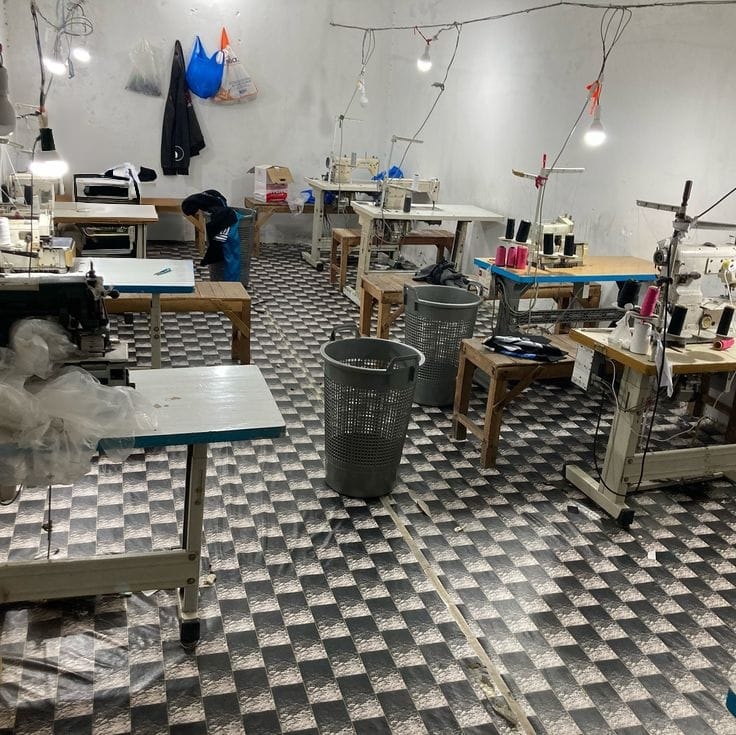
Stitching apparel manufacturing stage04

Stitching

Stitching follows the construction details approved for the garment: seams, joining, closures, pockets, cuffs, hems and finishing. A clear product specification helps explain these choices without relying on a name or reference image alone. Include measurements, seam diagrams, labels and details that are important to fit or function. Discuss any tolerance or acceptance point that matters to your brand and document the agreement. If the sample review leads to a construction change, update the specification and confirm its impact on the quote and schedule.

Checking apparel manufacturing stage05

Checking

Product checking should use criteria that both sides understand. Buyers can identify the measurement points, visual features, artwork placement, stitching or finishing details they expect to be reviewed. Explain how findings should be recorded and what action is expected if a result falls outside the agreed criteria. Inspection scope, sampling plans, tolerances and acceptance methods are specific to the order; Perfit Industry does not publish a blanket inspection guarantee or certification. Agree the method in writing, including when checking occurs and what documentation is provided.

Packaging apparel manufacturing stage06

Packaging

Packaging is part of order preparation and should be specified alongside the product. Describe folding, individual bagging, size grouping, labels, inserts, assortment, cartons or shipping marks that you need to discuss. If packaging artwork or destination information is required, provide the files and instructions before the order is finalized. Confirm which materials and packing steps are included, whether special requests change cost or timing, and how the goods are to be prepared for the agreed destination. Do not assume a packaging method or export arrangement without written confirmation.

Specifications to include in your brief

ANSI/ASQ Z1.4 & ISO 2859-1 Level II Normal Sampling
Critical Defects: Zero-tolerance (0 Ac / 1 Re)
Major Defects (AQL 2.5): Dimensional & functional compliance
Minor Defects (AQL 4.0): Aesthetic and untrimmed thread limits
Pre-shipment needle detection & calibrated metal scanning
Dimensional verification against tech pack tolerances (+/- 0.5 cm)

Frequently asked manufacturing questions

Clear answers to key questions about minimums, fabric selection, pre-production sampling, and global logistics.

An AQL (Acceptable Quality Limit) chart is an internationally recognized statistical sampling standard (ISO 2859-1 / ANSI/ASQ Z1.4) used to determine how many finished garments to inspect from a production batch and the maximum number of allowable defects before a lot is accepted or rejected.

Ready to review your custom apparel project?

Submit your tech pack, sketches, or reference garment to receive an itemized factory price quotation within 24 hours.

WhatsApp
Apparel collection planning

Ready to Build Your Next Collection?

Tell us what you want to make, your target quantity and where you plan to sell. Our team in Sialkot can review the brief and discuss the next steps with you.

Contact Manufacturing Team
Based in Sialkot, PakistanMOQ starts at 25 units**Minimums vary by product and order requirements
Chat on WhatsApp